
A complete real-time stack — WebRTC infrastructure powered by StreamGrid, with Spark's application framework on top. One platform, built for live experiences.
Talk to the Team
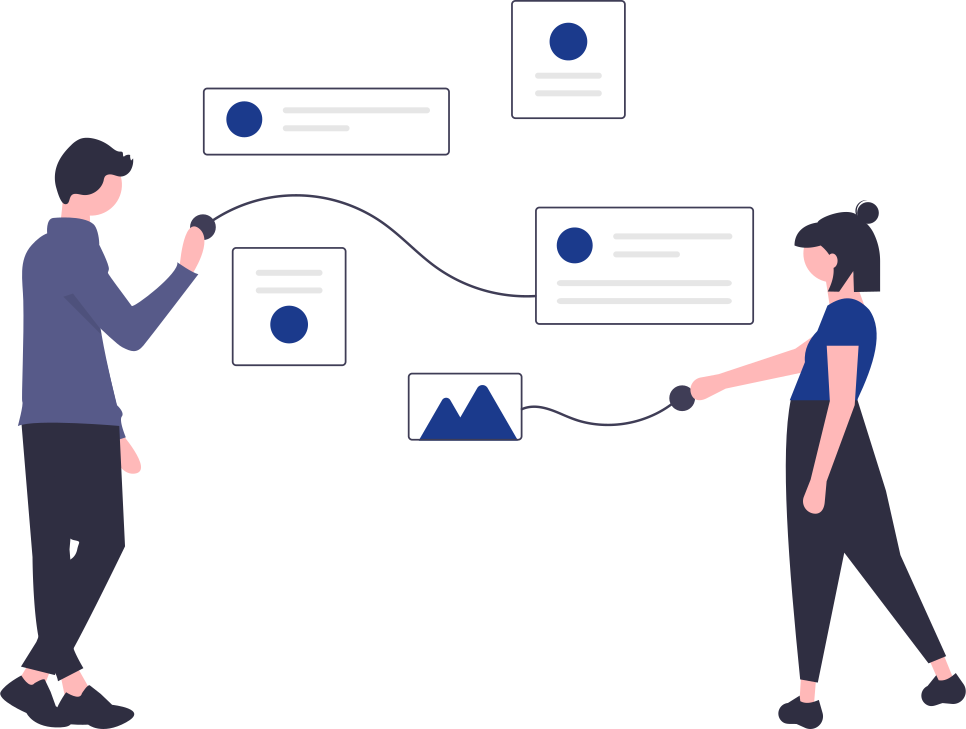
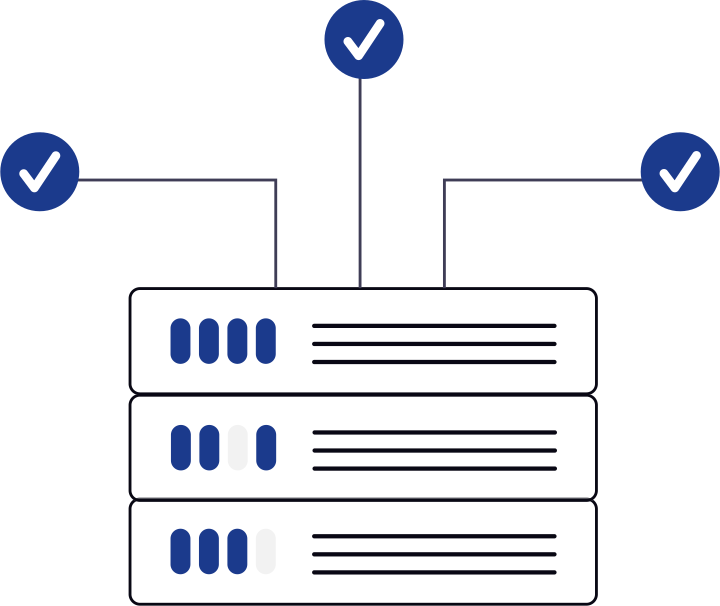
Spark and StreamGrid work together as a unified real-time stack — application logic on top, WebRTC infrastructure underneath.
The application framework — SDKs, APIs, session management, embeddable components, and live interaction modules. Build real-time experiences into your app without rebuilding the stack.
The WebRTC infrastructure engine — SFU media routing, SRTP encryption, edge-native processing, and hybrid cloud + bare-metal deployment. Production-grade real-time protocols at scale.
The foundation layer — production-grade WebRTC infrastructure that handles the hard parts of real-time media at scale.
Selective Forwarding Unit architecture for efficient media routing — dynamically adapting quality per participant based on network conditions and device capabilities.
Media processing at the edge — minimizing hops between participants. Dynamic node selection based on geography and network conditions for optimal latency.
End-to-end encrypted media transport with SRTP and DTLS key exchange — ensuring every audio and video stream is secure by default, not as an afterthought.
Optimized ICE negotiation, TURN fallback, and adaptive bitrate control — delivering consistent sub-second latency even across unreliable network conditions.
Protocol bridge between WebRTC and PSTN telephony networks — enabling SIP trunking for inbound and outbound voice calls alongside browser-based real-time sessions.
Tenant-isolated media planes with independent resource allocation — each operator gets dedicated routing, bandwidth policies, and session limits without cross-tenant interference.
SDKs, APIs, and pre-built modules that let you integrate WebRTC and agentic voice capabilities into your own applications — without rebuilding the stack.
Integrate live sessions into your application with a simple SDK — session creation, participant management, and state handling out of the box.
RESTful and WebSocket APIs for session control, participant events, and media configuration — integrate live capabilities into any application architecture.
Pre-built modules for real-time participation — signaling, presence, and interactive events that plug into your existing user experience.
Drop-in UI components for video, audio, and voice — fully customizable to match your application's design system and branding.
Webhooks and event streams for session lifecycle, participant activity, and media state — connect Spark to your backend, analytics, or business logic.
Tenant isolation, role-based access, and operational controls built in — deploy across teams, customers, or business units with proper boundaries.
AI voice agents that run on the same WebRTC infrastructure — natural conversations over browser and telephony, with sub-second response times.
End-to-end voice agent architecture — speech-to-text, LLM processing, and text-to-speech — orchestrated for natural, real-time conversations.
Voice agents connect through both WebRTC in the browser and SIP trunking to phone networks — one pipeline, two transport layers.
Ultra-low latency voice processing powered by the same WebRTC media engine — delivering the responsiveness needed for natural, human-like conversations.
Building WebRTC infrastructure and a real-time application from scratch takes years and millions. Spark gives you both layers — production-grade protocols and a ready-to-customize platform — so you focus on your market, not your media stack.
Skip the infrastructure years — SFU, SRTP, DTLS, ICE, TURN — all handled. You build on top, not from scratch.
Validate your model earlier — go to market with a working platform, not a prototype.
Build for real-time, not workarounds — purpose-built for live interaction, not bolted onto batch-processing architecture.

We're currently in development and open to conversations with teams who want to build on production-grade WebRTC infrastructure — whether it's live applications, interactive experiences, or AI voice agents.
Talk to the Team